There’s something that happens to me every time I set foot in a place like Goulburn. I forget about Instagram trends. I stop checking my phone every few minutes. And instead, I start looking—really looking. I see the way the light folds itself across the old sandstone facades. I hear the cockatoos erupt at dusk like a suburban opera. I feel the weight of quiet streets that have known both war parades and early morning market stalls. And that, my friend, is the moment I know: this place is going to give me more than stories—it’s going to give me photographs worth remembering.
Discover new places and experiences

So, if you’re here for the first time and wondering: how do I take travel photos in Goulburn that don’t just capture the place, but stop the scroll?—you’re in the right spot. Whether you’re a budding content creator or a traveller who just wants more than blurry selfies, these ten tips will help you see Goulburn like a lens does: with depth, soul, and timing.
1. Go Early or Go Golden: Light is Everything
You could have the best camera in the world (I shoot with a Canon EOS R6 and sometimes even just an iPhone 14 Pro), but without the right light, your images will fall flat. Goulburn’s early morning light is special—it hits the heritage buildings with a soft peach hue, casting long shadows that bring texture to otherwise ordinary scenes.
If you’re headed to Belmore Park, St. Saviour’s Cathedral, or the Goulburn Courthouse, try arriving around 6:30 to 7:30 a.m. in the warmer months. The golden light dances beautifully across the gothic-style architecture. Likewise, for sunset, the Rocky Hill War Memorial offers sweeping west-facing views ideal for silhouette shots or warm-toned portraits.
Quick Tip: Use your phone’s or camera’s “pro” mode to underexpose slightly—it preserves detail and makes editing easier later.
2. Make the Big Merino Your Muse, But Find a New Angle
Yes, it’s iconic. Yes, it’s a giant sheep. Yes, everyone takes a photo standing awkwardly in front of it. But here’s your creative challenge—make it interesting.
Try shooting the Big Merino from a low angle just before sunset when the warm light softens its stone-grey surface. Or get up close to the textures of the concrete wool and shoot abstract. Another idea? Use a drone (where permitted) to capture it from above, framed against the car parks and highways to show scale.
Creative Prompt: Use a wide-angle lens and shoot from across the road with traffic blurred in motion—modern life meets old Australia.
3. Look Down Every Alley and Turn Every Corner
One of the best pieces of advice I ever got from a photojournalist was: “never stop at the obvious.” In Goulburn, the magic is in the in-between spaces: rusted gates, painted signs, crumbling bricks, and the way shadow lines fall through alleyways.
Between Auburn Street and Clinton Street, you’ll find tiny laneways covered in faded murals, vintage doors, and sometimes even pop-up street art done by local students. These are brilliant for creating portrait backdrops with character.
Styling Tip: Wear muted tones—beige, olive, denim—to let the scene stand out while keeping your presence natural.

4. Tell a Story with Layers, Not Just Faces
The temptation is always to zoom in on someone smiling—but think about what story you’re telling. Use layers. Maybe it’s your friend framed in a cafe window with a steaming mug, the reflection of a eucalyptus tree in the glass, and a sign reading “Locally Roasted.”
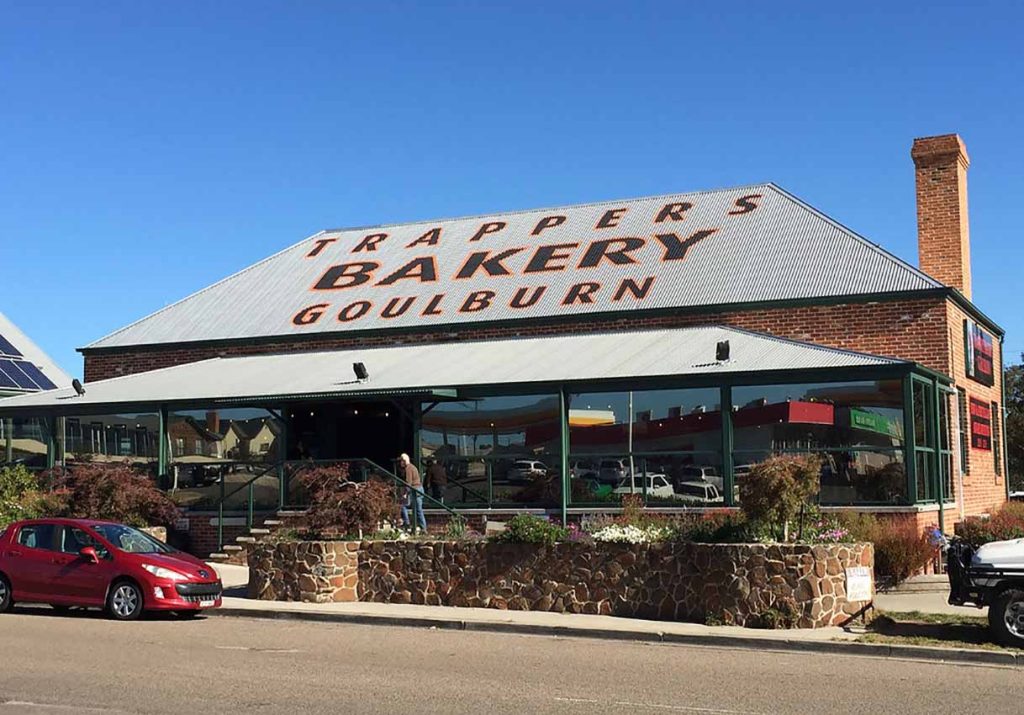
In Goulburn, you can craft entire narratives with one frame. Visit Trappers Bakery around 10 a.m. when there’s a mix of truckers, tourists, and locals. Capture the movement, the humanity, the crumbs on the table. That’s travel photography.
Travel Journaler’s Trick: Always carry a compact tripod and set your phone to 3-second delay to get candid shots even when solo.
5. Water, Fog, and Rail Yards: Embrace the Moody Moments
We often chase sunshine for travel photos, but I’ll tell you this—the best shots I’ve taken in Goulburn came on misty mornings and overcast afternoons.
Goulburn Rail Heritage Centre, for instance, is hauntingly photogenic when there’s fog or drizzle. Old locomotives, rusted textures, and deep colour contrast become atmospheric gold under soft light.
Moodboard Moment: Raincoats, black boots, vintage tones—channel some Wes Anderson melancholy with symmetry and mood.
6. Involve the Locals—With Permission
There’s this old man who sells honey at the Saturday market outside Belmore Park. His hands are like cracked leather, and he tells stories with his eyes. I asked politely if I could take a portrait. He agreed, and it became one of my most liked photos on Instagram—not because of editing, but because it was true.
Always ask before photographing people. Goulburn folk are warm, proud, and often full of stories. When they say yes, they’re offering you more than an image—they’re inviting you into their community.
Pro Tip: Offer to send them the photos later. It builds trust, and sometimes they’ll even suggest better spots you hadn’t thought of.
7. Composition Is Queen—Use Frames, Lines, and Layers
Don’t just stand and shoot. Move. Squat. Climb (safely). Use natural frames like archways at St. Saviour’s Cathedral, tree branches over Victoria Park, or fence posts in North Goulburn to add depth and character.
Look for leading lines in paths, fences, or shadows to draw the eye into your subject. Sometimes, the lines lead nowhere—and that’s okay too. It adds curiosity.
Bonus Composition Tip: Try the “rule of odds.” Odd-numbered groupings in a frame—like 3 sheep or 5 lamp posts—often look more dynamic than even ones.
8. Golden Hour Isn’t Just About Sunsets—Use Blue Hour and Night Too
Some of Goulburn’s best photos are hiding in the hour after sunset. The cathedral, war memorial, and even shopfronts light up beautifully, and the deep blue sky offers perfect contrast.
Use a tripod and slow shutter to capture the glow. I once took a shot of the Goulburn Court House with car lights streaking by, the clock tower illuminated, and mist rising from the road. It looked straight out of a graphic novel.
Gear Note: For smartphones, use “night mode” and stabilize your device. For cameras, f/2.8 lens with ISO under 800 gives clean, cinematic results.
9. Edit Thoughtfully—Not Trendily
Use editing to enhance, not disguise. I prefer Lightroom Mobile on my iPhone, and I keep a consistent preset for my Australia content—soft shadows, slightly desaturated greens, warm highlights.
But most importantly, I try to stay away from filters that erase the essence of a place. Goulburn doesn’t need to look like Morocco or Paris. Let it be gritty, aged, honest.
Editing Tip: Try adjusting white balance manually. Cooler tones give mood, warmer tones give nostalgia. Experiment based on story, not likes.
10. Stay Longer. See More. Shoot With Soul.
Too many travellers do Goulburn as a pass-through on the way to Sydney or Canberra. Don’t make that mistake. Spend at least 2–3 nights, explore beyond the obvious, and you’ll unlock a treasure chest of visual poetry.
I stayed at the Bakehouse Motel for its location and character. You could also consider Goulburn Central Motel—quirky charm and walkable to photo spots. For something boutique, Clonmacnoise Guesthouse offers stunning colonial interiors that are very shoot-worthy.
And while you’re there, eat at The Roses Cafe (natural light heaven) and grab dinner at The Tatts—a pub with charm and a killer steak.
Trusted Booking Platforms for a Seamless Goulburn Trip
I’ve tried them all. These platforms deliver, especially for regional travel:
- Wotif – Great for bundled stays in Goulburn and flight discounts from Sydney or Canberra.
- Trip.com – Their mobile app is a dream for last-minute hotel and activity bookings in small towns.
- RedBalloon – Amazing for finding photo-worthy experiences and activities.
- Experience Oz – Tickets for regional attractions and day trips, all bookable in one place.
Where the Camera Meets the Heart: Emotional Truths Behind the Lens
I didn’t expect Goulburn to shake me. I came here with a travel itinerary, a solid camera, and a plan to tick boxes. But like many small towns in Australia, Goulburn has its own rhythm, and if you allow it, it slows you down. That’s when the good photos start to happen—not when you’re chasing shots, but when you start to listen to the town.
I remember sitting on the sandstone steps of St. Saviour’s Cathedral one afternoon. The bells had just stopped ringing. A group of kids were skateboarding on the opposite sidewalk. Behind me, a woman was knitting on a bench, watching the world go by. I took no photos for twenty minutes. Just watched. And in those quiet, almost invisible moments, I saw the truth of this place.
I later captured one of my favorite shots: a boy mid-kickflip in front of the cathedral’s shadow, with golden light tracing the tips of his hair. Pure accident. Pure Goulburn.
That image taught me this: good photography doesn’t chase spectacle—it waits for authenticity.
Telling a Broader Story Through a Series
One photograph can stop someone. But a series of photos—curated and intentional—can transport them. I now treat each trip like a short story in images: an opener, a build-up, a climax, and a resolution.
For Goulburn, here’s how I structured my visual story:
- Opening Shot: Sunrise over the city, taken from the Rocky Hill War Memorial, symbolizing arrival and anticipation.
- Establishing Place: Details of signage, architecture, and the Big Merino—not just postcards, but with thoughtful angles.
- Daily Life: Locals walking dogs, shopkeepers chatting, school kids laughing—candid slices of routine.
- Emotional Heart: A portrait of the elderly beekeeper at the weekend market, eyes twinkling as he spoke about the drought.
- Closing Frame: A foggy street at dawn, empty but expectant—like a town waiting for its next story to unfold.
Try doing the same. Before you even start shooting, write your story. It helps you photograph not just what you see, but why it matters.
When the Trip Ends, the Real Work Begins
The photos you take in Goulburn aren’t just snapshots. They’re threads—pull on them and you’ll uncover stories, memories, and sometimes, parts of yourself you forgot you had.
And in every frame—every golden shadow, every rusted rail, every smile—I saw a kind of quiet dignity that cities often lose in their rush to shine.
That’s Goulburn. And that’s what you capture, if you wait long enough to see.